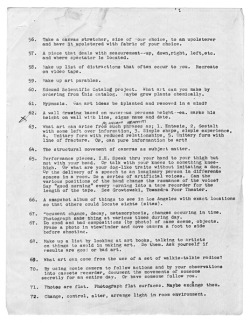
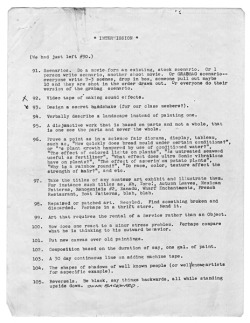
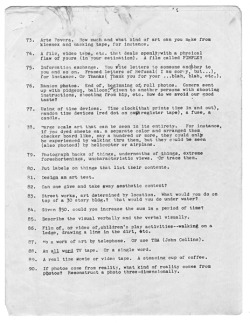
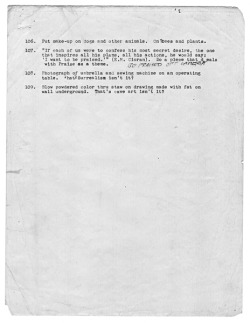
John Baldessari
- Reblogged from drawitwithyoureyesclosed

This weekend’s New York Times Magazine story about the failure of the ZPM espresso maker Kickstarter reminds me to say: Kickstarter is a tool for managing risk.
...

Designing Procedural Stealth for Invisible Inc. - James Lantz - GDC2015
I have to admit, as much as I love this talk, I...
“If you only have a hammer”, the saying goes, “you treat everything as if it were a nail”.

Here comes the sun #GivesYouWings

Kenneth Goldsmith, Uncreative Writing
It’s funny to think about how outrageous I found Kenny’s ideas at first, and now how unbelievably obvious and level-headed I find...
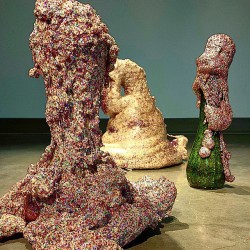
Glit-canos. Newest addition to the pop-up glit exhibit at #jmu. # inprogress
Did you make these? Nice work.

The dream team.

i’m so glad i started watching this show
John Baldessari
“Design fiction, according to Bleecker, is an essential practice — it’s prototyping for ideas. “In my mind this fits alongside the canonical tools that a designer might expect to employ,” he told me, “Design research: check. Anthropology and ethnography: check. Draw a straight line: check. You should know how to do design fiction, you should be able to take an idea and know how to look at it from the side, take a glancing blow at it to test its integrity.””
 High-res
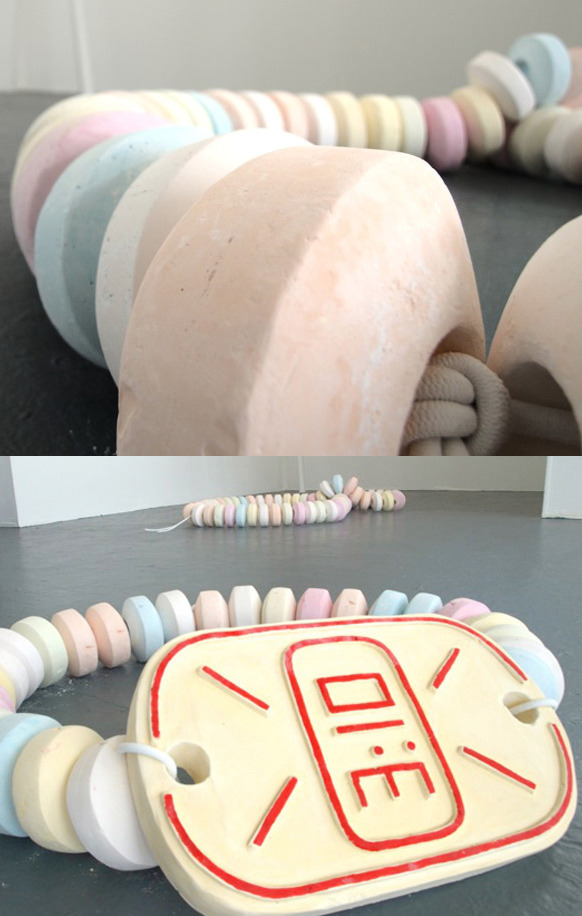
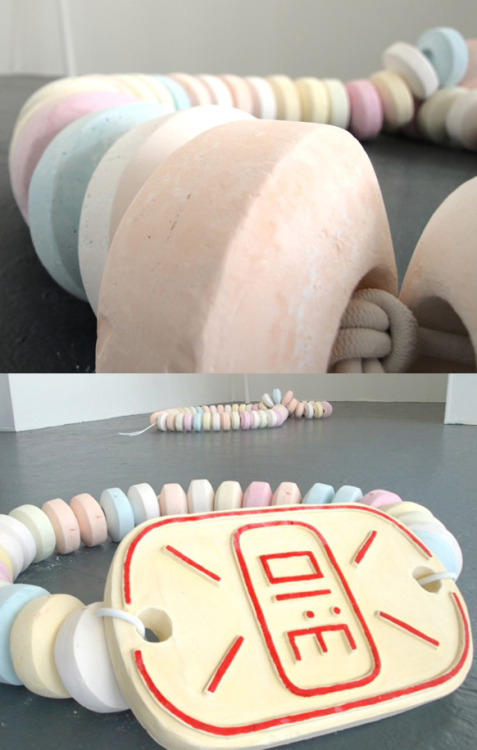
For her degree show, artist Nicola Freeman created a project featuring giant confectionery, using plaster and resin (sadly inedible).
Found via The Jealous Curator.
(via hoveringcat)
“Basically, prototyping won’t have to end. Eventually a product might autonomously make (and even enact) certain kinds of design recommendations based on an owner’s particular usage pattern. A product can finish itself. Sensing will also make it possible for usage data to be created and passed on to more advanced versions of a product that are used by the same user in the future.”
“Just outside the Benrath Senior Center in Düsseldorf, Germany, is a bus stop at which no bus stops. The bench and the official-looking sign were installed to serve as a “honey trap” to attract patients with dementia who sometimes wander off from the facility, trying to get home. Instead of venturing blindly into the city and triggering a police search, they see the sign and wait for a bus that will never come. After a while, someone gently invites them back inside.”
“But this kind of thinking misses the point of the Romantic creative imagination. The Romantics weren’t obsessed with who created what, because they thought you could be creative without “creating” anything other than the liveliness in your own head. (“All men are poets in their way,” Coleridge wrote.) In fact, because we think of creativity in terms of objects instead of minds, and outcomes instead of experiences, the idea of a lone, creative genius has become as inconceivable to us as the idea of a lone, unprofitable businessman. We believe creativity is “real” only when a crowd says so; we need creativity to “pay off.””
“What you need is a constant and consistent way of designing, not a style.”
 High-res
The latest trend in Bonsai (the Japanese art form of growing miniature trees) is to grow trees even smaller.
Artists are creating tiny plants, creating a new category known as cho-mini bonsai (ultra-small bonsai).
Found via Colossal.
(via hoveringcat)
“But what if, under the influence of an ever-faster, ever-busier world, we become more impatient with each other? Love’s work is hard work, and a reluctance to put in the sustained effort is a surefire recipe for the erosion of our personal relationships.”
“
“The original observation felt most like this,” Teller said. “When the Pony Express came along, it really reshaped society to be able to move things around fairly reliably at that speed, which was measured in many days. The U.S. Postal Service—growing partly out of the Pony Express and having it be even more reliable and starting to shorten the time—really did change society again.
“FedEx overnight delivery has absolutely changed the world again. We’re starting to see same-day service actually change the world,” he continued. “Why would we think that the next 10x—being able to get something in just a minute or two—wouldn’t change the world?”
”